
21 अगस्त 2026 के Top Current Affairs: UPSC, BPSC, SSC, Railway एवं अन्य सरकारी परीक्षाओं के लिए विस्तृत विश्लेषण
महत्वपूर्ण राष्ट्रीय, आर्थिक, अंतरराष्ट्रीय, विज्ञान, शासन एवं सामाजिक क्षेत्र के मुद्दों का परीक्षा-केंद्रित विश्लेषण।
Sources: The Hindu, The Indian Express एवं संबंधित सरकारी/नियामक स्रोत
Exam Focus: UPSC, BPSC, State PCS, SSC, Railway, Banking, Teaching एवं अन्य Government Examinations
आज के Top 10 Current Affairs
- Industrial Relations Code और Supreme Court का ‘Industry’ पर फैसला
- Delhi Master Plan 2047
- Eight Core Industries की Growth
- भारत-जापान Maritime Security Cooperation
- MMDR Amendment Bill 2026 और Fiscal Federalism
- 31वीं Southern Zonal Council Meeting
- SEBI की F&O Trading पर नई Study
- NAMASTE Scheme का विस्तार
- NMC का Single Medical Licence Proposal
- RBI Repo Rate और संभावित Monetary Policy बदलाव
Industrial Relations Code और Supreme Court का ‘Industry’ पर फैसला
क्या हुआ?
Supreme Court की Constitution Bench ने ‘industry’ की पुरानी कानूनी व्याख्या से संबंधित महत्वपूर्ण सवाल पर फैसला दिया है। यह मुद्दा विशेष रूप से महत्वपूर्ण है क्योंकि 1978 के प्रसिद्ध Bangalore Water Supply and Sewerage Board v. R. Rajappa फैसले ने ‘industry’ शब्द की बहुत व्यापक व्याख्या की थी।
1978 का फैसला क्यों महत्वपूर्ण था?
1978 में Supreme Court ने एक व्यापक Triple Test विकसित किया था। इसके अनुसार यदि कोई गतिविधि व्यवस्थित या संगठित तरीके से चलती है, employer-employee cooperation पर आधारित है और मानव आवश्यकताओं को पूरा करने के लिए goods या services का उत्पादन करती है, तो वह ‘industry’ के दायरे में आ सकती है।
इस व्यापक interpretation के कारण hospitals, educational institutions और municipalities जैसी संस्थाएं भी कुछ परिस्थितियों में ‘industry’ की अवधारणा के अंतर्गत आ सकती थीं।
अब क्या बदला?
नई Industrial Relations Code, 2020 में ‘industry’ की परिभाषा अलग statutory framework में दी गई है। Supreme Court ने स्पष्ट किया कि 1978 के फैसले की interpretation को नई Code की Section 2(p) पर सीधे लागू नहीं किया जा सकता। अर्थात नई व्यवस्था की व्याख्या उसके अपने statutory framework के आधार पर होगी।
पुराने कानून में Supreme Court ने ‘Industry’ की एक व्यापक judicial definition विकसित की थी। अब नई Industrial Relations Code लागू होने के बाद अदालत को यह देखना होगा कि नई Code में Parliament ने ‘Industry’ को किस तरह define किया है।
परीक्षा के लिए महत्व
- Bangalore Water Supply case — 1978
- न्यायिक व्याख्या — Triple Test
- नई व्यवस्था — Industrial Relations Code, 2020
- महत्वपूर्ण क्षेत्र — Labour Law, Fundamental Rights, Industrial Relations
Delhi Master Plan 2047: राजधानी के अगले दो दशकों का Urban Blueprint
Master Plan क्या होता है?
Master Plan किसी शहर के भविष्य के विकास के लिए एक दीर्घकालिक planning document होता है। इसमें तय किया जाता है कि शहर में housing, transport, industry, commercial areas, green spaces, infrastructure और public facilities किस प्रकार विकसित होंगे।
MPD-2047 क्यों महत्वपूर्ण है?
Master Plan for Delhi 2047 (MPD-2047) का उद्देश्य तेजी से बढ़ती दिल्ली की population, housing demand, transport pressure और environmental challenges को ध्यान में रखते हुए 2047 तक Delhi के विकास का framework तैयार करना है।
वर्तमान projections के अनुसार 2047 तक Delhi की population लगभग 3.2 करोड़ तक पहुंच सकती है और लगभग 40 लाख अतिरिक्त homes की आवश्यकता बताई गई है।
मुख्य Focus Areas
| क्षेत्र | मुख्य उद्देश्य |
|---|---|
| Housing | बढ़ती आबादी के लिए बड़े पैमाने पर housing supply और affordable housing |
| Transport | Metro, RRTS, buses और integrated public transport को मजबूत करना |
| Environment | Green areas और Yamuna ecosystem की सुरक्षा |
| Urban Redevelopment | पुराने एवं अनियोजित क्षेत्रों का पुनर्विकास |
| Economic Growth | Business और employment centres का विकास |
| Land Pooling | बड़े land parcels को planned development के लिए एकीकृत करना |
Transport से जुड़ा महत्वपूर्ण तथ्य
योजना में public transport network को बड़े स्तर पर बढ़ाने का लक्ष्य है। Metro network के विस्तार तथा RRTS corridors के माध्यम से Delhi को NCR के अन्य हिस्सों से बेहतर तरीके से जोड़ने पर जोर है।
MPD-2047 का मूल विचार है कि दिल्ली को केवल ज्यादा सड़कें बनाने वाला शहर न बनाया जाए, बल्कि housing + transport + employment + environment को एक साथ plan किया जाए।
- MPD = Master Plan for Delhi
- Long-term horizon = 2047
- Population projection = लगभग 3.2 करोड़
- Additional housing requirement = लगभग 40 लाख homes
- मुख्य संस्था = Delhi Development Authority (DDA)
Eight Core Industries: जुलाई 2026 में Growth धीमी
Eight Core Industries क्या हैं?
भारत के industrial sector में आठ ऐसे महत्वपूर्ण sectors हैं जिनका देश की overall industrial activity पर बहुत प्रभाव पड़ता है। इन्हें Eight Core Industries कहा जाता है।
| Sector | July 2026 Performance |
|---|---|
| Coal | 7.6% growth |
| Crude Oil | -5.3% |
| Natural Gas | -3.7% |
| Refinery Products | 2.7% growth |
| Fertilizers | -8% |
| Steel | 2.9% growth |
| Cement | 13.1% growth |
| Electricity | 9% growth |
आठ core sectors की combined growth जुलाई 2026 में 5.4% रही, जबकि जून में यह लगभग 6% थी।
Iron Ore को लेकर महत्वपूर्ण सावधानी
Fertilizer sector क्यों महत्वपूर्ण है?
जुलाई में fertilizer production में 8% contraction दर्ज किया गया। The Hindu ने deficient और patchy monsoon तथा sowing activity में कमी को संभावित कारणों से जोड़ा।
Steel और Electricity का महत्व
Steel infrastructure, construction और manufacturing का महत्वपूर्ण input है। Electricity economic activity का broad indicator है। इसलिए इन sectors की performance को economic recovery के broader संकेतक के रूप में देखा जाता है।
Eight Core Industries का Index of Industrial Production (IIP) में कुल weight लगभग 40.27% है।
भारत-जापान Maritime Security Cooperation
क्या हुआ?
भारत और जापान ने defence और maritime security cooperation को और मजबूत करने की दिशा में कदम बढ़ाया है। जापान के Defence Minister Shinjiro Koizumi की भारत यात्रा के दौरान भारत-जापान defence cooperation, maritime security और defence technology cooperation पर चर्चा हुई।
Maritime Security क्या है?
Maritime security का अर्थ समुद्री क्षेत्र को piracy, illegal trafficking, maritime terrorism, strategic threats और अन्य security challenges से सुरक्षित रखना है। इसके लिए केवल warships ही पर्याप्त नहीं होते। Information sharing, surveillance, maritime domain awareness और joint exercises भी महत्वपूर्ण हैं।
भारत-जापान cooperation के प्रमुख क्षेत्र
- Maritime Domain Awareness (MDA)
- Naval exercises
- Defence equipment और technology cooperation
- Naval maintenance, repair and overhaul (MRO)
- Shipbuilding एवं defence industrial cooperation
- Humanitarian Assistance and Disaster Relief (HADR)
Indo-Pacific में इसका महत्व
भारत और जापान दोनों एक Free, Open, Inclusive और Rules-based Indo-Pacific की अवधारणा का समर्थन करते हैं। Indian Ocean और Western Pacific दोनों क्षेत्रों में maritime connectivity और security दोनों देशों के strategic interests से जुड़ी हुई हैं।
भारत के लिए Indian Ocean अत्यंत महत्वपूर्ण है क्योंकि भारत का व्यापार और energy supplies समुद्री routes पर काफी निर्भर हैं। जापान भी Indo-Pacific में सुरक्षित sea lanes चाहता है। इसलिए दोनों देशों का maritime cooperation strategic importance रखता है।
MMDR Amendment Bill 2026: Mining और Fiscal Federalism
MMDR Act क्या है?
Mines and Minerals (Development and Regulation) Act, 1957 भारत में mines और minerals के development तथा regulation से संबंधित प्रमुख केंद्रीय कानून है।
भारत में mineral resources आर्थिक विकास, infrastructure, manufacturing, energy security और strategic industries के लिए अत्यंत महत्वपूर्ण हैं।
2026 Amendment में क्या महत्वपूर्ण है?
MMDR Amendment Bill, 2026 दोनों सदनों से 13 अगस्त 2026 को पारित हुआ। इसका एक महत्वपूर्ण उद्देश्य mineral sector में taxation और levies के लिए अधिक uniformity और predictability लाना है।
Bill के तहत States द्वारा mineral rights और mineral-bearing lands पर कुछ नए taxes, cess या levies लगाने की शक्ति को Central Government द्वारा निर्धारित conditions/restrictions के अधीन किया गया है।
Centre का तर्क
Centre का कहना है कि अलग-अलग राज्यों में अत्यधिक और unpredictable levies से mining की लागत बढ़ सकती है, investment प्रभावित हो सकता है और domestic mineral production महंगा पड़ सकता है।
States की चिंता
दूसरी ओर mineral-rich States को चिंता है कि taxation और mineral-bearing land पर Central restrictions से उनकी fiscal autonomy प्रभावित हो सकती है। इसी कारण यह मुद्दा केवल mining policy नहीं बल्कि Centre-State Relations और Fiscal Federalism से भी जुड़ गया है।
2024 Supreme Court Judgment से connection
2024 में Supreme Court ने mineral rights पर States की taxation power से संबंधित महत्वपूर्ण interpretation दी थी। 2026 का amendment उसी broader constitutional debate के संदर्भ में महत्वपूर्ण है।
सरल सवाल है — “खनिज से पैसा कमाने और उस पर levy/tax लगाने का अधिकार किस स्तर की सरकार के पास कितना होना चाहिए?” यही विवाद MMDR Amendment को Federalism का महत्वपूर्ण topic बनाता है।
31वीं Southern Zonal Council Meeting
Southern Zonal Council क्या है?
Zonal Councils भारत में Centre और States के बीच cooperation बढ़ाने के लिए बनाए गए statutory bodies हैं। इनका गठन States Reorganisation Act, 1956 के तहत हुआ था।
Southern Zonal Council में कौन-कौन शामिल हैं?
| Category | Members |
|---|---|
| States | Andhra Pradesh, Karnataka, Kerala, Tamil Nadu, Telangana |
| Union Territories | Puducherry, Lakshadweep, Andaman & Nicobar Islands |
31वीं बैठक
31वीं Southern Zonal Council Meeting की अध्यक्षता Union Home Minister Amit Shah ने Mahabalipuram/Mamallapuram, Tamil Nadu में की।
मुख्य मुद्दे
- Inter-State water disputes
- Regional infrastructure
- Healthcare और education
- Internal security
- Centre-State cooperation
- Economic development
- Andhra Pradesh Reorganisation से जुड़े मुद्दे
- Delimitation से संबंधित चिंताएं
Water disputes क्यों महत्वपूर्ण हैं?
दक्षिण भारत में Cauvery, Krishna, Godavari और Mullaperiyar जैसे water-related issues कई राज्यों के बीच लंबे समय से महत्वपूर्ण विषय रहे हैं। इनका सीधा संबंध agriculture, drinking water, irrigation और federal relations से है।
Zonal Council कोई court नहीं है। यह राज्यों और Centre को एक table पर बैठाकर common problems पर बातचीत और coordination का platform देता है। इसके recommendations advisory nature के होते हैं।
- Legal basis — States Reorganisation Act, 1956
- Nature — Statutory body
- Southern Zonal Council — 5 States + 3 UTs
- Chairman — Union Home Minister
- Purpose — Inter-State एवं Centre-State cooperation
SEBI Study: F&O Trading में Individual Traders को भारी नुकसान
F&O क्या है?
F&O यानी Futures and Options एक derivatives segment है। इसमें trader किसी underlying asset जैसे stock या index के future price movement पर position लेता है।
यह leverage के कारण आकर्षक लग सकता है, लेकिन इसी कारण इसमें नुकसान भी बहुत तेजी से बढ़ सकता है।
SEBI की नई Study
SEBI की FY2025-26 study के अनुसार individual traders की participation में गिरावट आई, लेकिन बड़ी संख्या में individual traders को फिर भी नुकसान हुआ।
- लगभग 87.7% individual traders को FY26 में loss हुआ।
- Individual traders का aggregate net loss लगभग ₹91,685 करोड़ रहा।
- Individual traders की संख्या में लगभग 20% की गिरावट देखी गई।
Regulator के लिए यह चिंता क्यों है?
Retail investors के लिए derivatives market में लगातार losses financial vulnerability बढ़ा सकते हैं। इसी कारण SEBI ने expiry-day concentration, contract size और option premium collection जैसे क्षेत्रों में regulatory measures किए हैं।
F&O में profit और loss दोनों तेजी से हो सकते हैं। इसलिए केवल यह देखना कि “बहुत लोग trading कर रहे हैं” पर्याप्त नहीं है। यह देखना भी जरूरी है कि कितने traders वास्तव में sustainable profit कमा रहे हैं।
NAMASTE Scheme का विस्तार
NAMASTE क्या है?
NAMASTE का full form है: National Action for Mechanised Sanitation Ecosystem. यह sanitation workers की safety, dignity और social security को बढ़ाने वाली प्रमुख सरकारी पहल है।
Scheme का मूल उद्देश्य hazardous manual cleaning को समाप्त करना और sanitation work को mechanised तथा safer बनाना है।
अब क्या बदलाव प्रस्तावित है?
Social Justice Ministry ने scheme का scope urban areas से आगे rural areas तक बढ़ाने का प्रस्ताव रखा है। इसके तहत drain cleaners, sewage treatment plants और faecal sludge treatment plants में काम करने वाले workers को भी शामिल करने का प्रस्ताव है।
- Rural sanitation workers
- Drain cleaners
- Sewage Treatment Plant workers
- Faecal Sludge Treatment Plant workers
The Hindu की रिपोर्ट के अनुसार expanded scheme के लिए लगभग ₹498.73 करोड़ का outlay प्रस्तावित है, जिसे 2026-27 से 2030-31 तक खर्च किया जाना है। 2019 से जून 2026 तक hazardous sewer/septic tank cleaning से संबंधित 498 deaths Parliament में reported हुई थीं।
Scheme का सामाजिक महत्व
Sanitation workers को केवल employment के रूप में नहीं बल्कि occupational safety और human dignity के दृष्टिकोण से देखना जरूरी है। Mechanisation से hazardous manual entry को कम करना इस scheme का core objective है।
- Full Form — National Action for Mechanised Sanitation Ecosystem
- Launch — FY 2023-24
- Ministry — Ministry of Social Justice & Empowerment
- Focus — Mechanised sanitation + safety + dignity + rehabilitation
NMC का Single Medical Licence Proposal
Current Development
National Medical Commission (NMC) ने doctors के registration और licence to practise से संबंधित एक महत्वपूर्ण draft proposal रखा है।
प्रस्ताव के अनुसार यदि कोई medical practitioner किसी State Medical Council में register होकर National Medical Register में एक Unique Identification (UID) प्राप्त करता है, तो उसे दूसरे State में practice करने के लिए अलग registration लेने की आवश्यकता नहीं होगी।
अभी समस्या क्या है?
भारत में doctors की registration व्यवस्था State Medical Councils और National Medical Register से जुड़ी हुई है। अलग-अलग राज्यों में practice के लिए registration-related procedures administrative burden पैदा कर सकते हैं।
प्रस्तावित व्यवस्था कैसे काम करेगी?
| वर्तमान/प्रस्तावित प्रक्रिया | प्रस्तावित व्यवस्था |
|---|---|
| State-level registration | State Medical Council registration जारी रहेगा |
| State बदलने पर registration issue | National UID के आधार पर nationwide practice |
| Multiple administrative processes | Unified NMC portal के माध्यम से अधिक integrated system |
इसका महत्व
- Doctors की mobility आसान हो सकती है।
- Registration process में duplication कम हो सकता है।
- Digital health governance को बढ़ावा मिल सकता है।
- National Medical Register की भूमिका मजबूत हो सकती है।
RBI Repo Rate: क्या 2026 में Rate Hike की संभावना बन रही है?
Repo Rate क्या है?
Repo Rate वह दर है जिस पर RBI commercial banks को short-term funds उपलब्ध कराता है। यह monetary policy का एक प्रमुख instrument है।
जब RBI repo rate बढ़ाता है तो सामान्यतः borrowing cost बढ़ने का दबाव बनता है। जब RBI rate कम करता है तो borrowing और economic activity को support मिल सकता है।
Current Situation
The Hindu के अनुसार policy repo rate फरवरी 2026 से 5.25% पर unchanged रहा है। लेकिन August MPC meeting के minutes में inflation के बढ़ते दबाव के कारण policy rate में recalibration की संभावना का संकेत मिला है।
Inflation क्यों महत्वपूर्ण है?
RBI का monetary policy framework inflation को ध्यान में रखते हुए interest rate decisions लेता है। यदि inflation लगातार ऊपर जाता है तो RBI के सामने price stability और economic growth के बीच संतुलन बनाने की चुनौती होती है।
- Repo Rate — 5.25%
- February 2026 से unchanged
- 2026-27 headline inflation projection में upward pressure की चिंता
- Core inflation के भी बढ़ने की संभावना पर चर्चा
क्या RBI ने Rate Hike कर दिया है?
यदि inflation बढ़ती है तो RBI demand को नियंत्रित करने के लिए interest rates बढ़ाने पर विचार कर सकता है। इससे loans महंगे हो सकते हैं, लेकिन inflationary pressure को कम करने में मदद मिल सकती है।
⚡ One-Liner Revision
परीक्षा में पूछे जा सकने वाले MCQs
- MMDR Amendment Bill — Federalism + Constitution + Economy
- Industrial Relations Code — Labour Law + Supreme Court
- Eight Core Industries — Economy + Industrial Growth
- Southern Zonal Council — Cooperative Federalism + Water Disputes
- India-Japan Maritime Cooperation — Indo-Pacific + Defence
External Links & Official Resources
नीचे दिए गए official और reference resources से संबंधित laws, policies, regulations, government announcements और examination-related information को विस्तार से पढ़ा जा सकता है।
Press Information Bureau
Government schemes, Bills, policies और official announcements.
Ministry of Labour & Employment
Labour laws, employment और Industrial Relations से संबंधित जानकारी.
Ministry of Mines
MMDR, minerals और mining sector से संबंधित official resources.
Delhi Development Authority
Delhi Master Plan और urban development से संबंधित resources.
Census of India
Census process, demographic data और population-related information.
Securities and Exchange Board of India
F&O, securities market, investor protection और regulations.
Insurance Regulatory and Development Authority
Insurance regulation, insurers और consumer protection.
National Medical Commission
Medical registration, regulations और National Medical Register.
Reserve Bank of India
Repo Rate, MPC, monetary policy और inflation-related resources.
Ministry of Home Affairs
Zonal Councils, Centre-State relations और internal security.
Ministry of External Affairs
India-Japan relations, Indo-Pacific और foreign policy resources.
Ministry of Defence
Defence policy, military cooperation और defence-related information.
Ministry of Social Justice & Empowerment
NAMASTE scheme और social justice initiatives से संबंधित resources.
The Hindu
News, analysis और editorial coverage.
The Indian Express
News, explainers और examination-oriented coverage.
The Hindu — 21 August 2026 Edition
The Indian Express — 21 August 2026 Edition
Ministry of Mines / PIB — MMDR Amendment Bill 2026
SEBI — FY2025-26 Equity Derivatives Studies
Ministry of Social Justice & Empowerment — NAMASTE Scheme
National Medical Commission — Draft Registration Regulations 2026
RBI — August 2026 MPC Minutes
Government/official releases on India-Japan Defence Cooperation
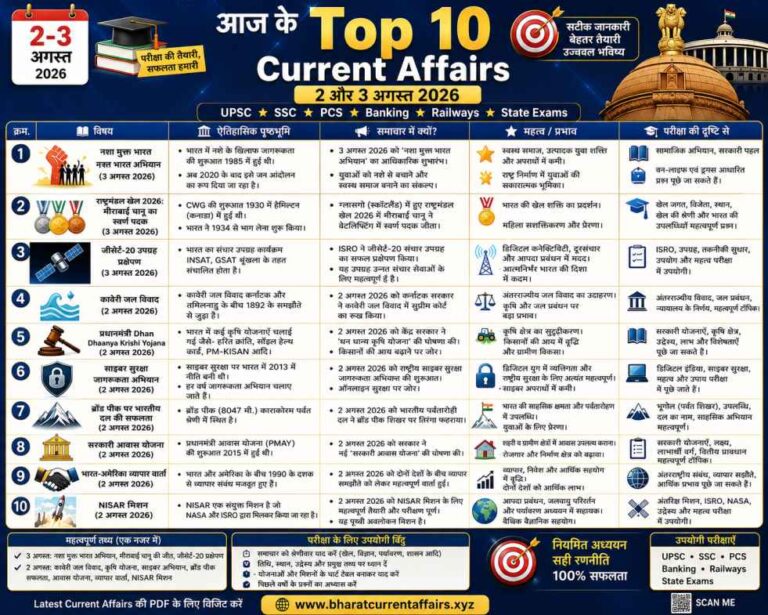
2-3 August 2026 Daily Current Affairs
2–3 अगस्त 2026 के Top 10 Current Affairs हिंदी में पढ़ें। UPSC, SSC, Banking, Railway, PCS व अन्य…
Read More →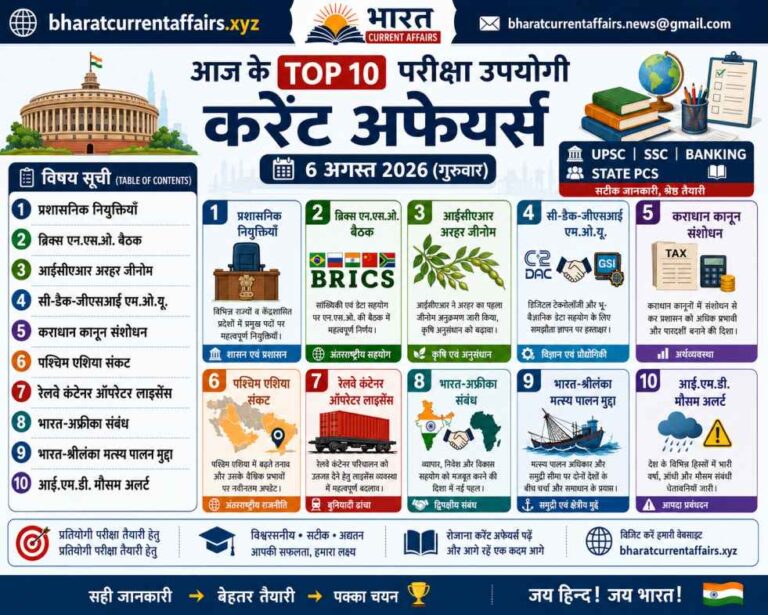
6 August 2026 Daily Current Affairs
Headline News for August 6, 2026: Key updates on new Cabinet Secretary TV Somanathan, BRICS NSO meeting, Critical…
Read More →
BRICS 2026: India Chairship, Members & Geopolitics
BRICS 2026 की India Chairship, 11 सदस्य, expansion, NDB, de-dollarisation, Global South और West Asia geopolitics की पूरी…
Read More →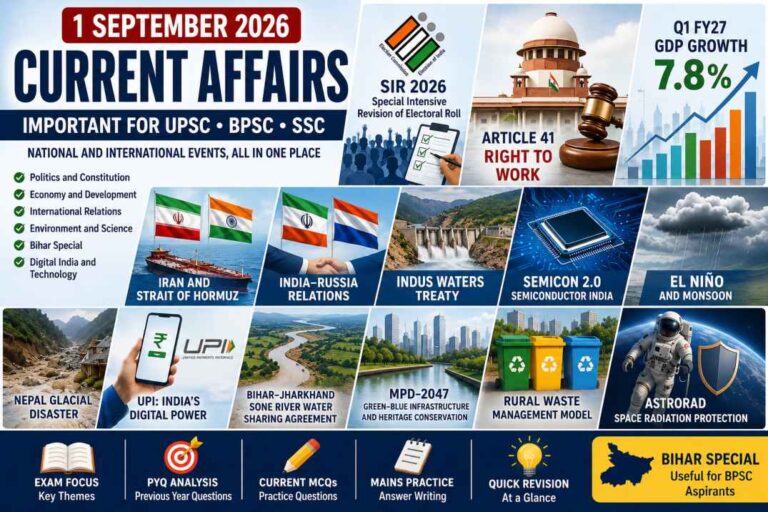
1 September 2026 Current Affairs: UPSC, BPSC & SSC
Read 1 September 2026 Current Affairs for UPSC, BPSC and SSC: SIR, GDP growth, Iran-Hormuz, IWT, Semicon 2.0,…
Read More →