📚 परीक्षा फोकस
2 सितंबर 2026 के newspapers में सबसे महत्वपूर्ण themes में Supreme Court का Article 142 का प्रयोग, चुनावी rolls की Special Intensive Revision (SIR), EVM counting में totaliser, SCO Bishkek Summit, भारत की 7.8% Q1 GDP growth, Indus Waters Treaty, Nepal की विनाशकारी flash floods, Semiconductor Mission 2.0, gig workers की social-security coverage, data centres का climate footprint, electronic waste का urban mining potential तथा sports में Asian Games preparation और US Open developments प्रमुख रहे। Awards के संदर्भ में newspaper के Daily Quiz में Magsaysay Award से जुड़े static facts भी दिए गए हैं।
2 सितंबर 2026 करेंट अफेयर्स: क्यों महत्वपूर्ण हैं आज के मुद्दे?
2 सितंबर 2026 करेंट अफेयर्स का सबसे महत्वपूर्ण पहलू यह है कि आज की खबरें अलग-अलग क्षेत्रों की होने के बावजूद एक-दूसरे से गहराई से जुड़ी दिखाई देती हैं। चुनावी rolls की शुद्धता सीधे लोकतांत्रिक प्रतिनिधित्व से जुड़ती है; Supreme Court का Article 142 न्यायिक शक्तियों की सीमा पर प्रश्न उठाता है; SCO में आतंकवाद और Afghanistan का मुद्दा भारत की regional security priorities से जुड़ता है; जबकि GDP growth, GST collections, oil imports और semiconductor ecosystem भारत की economic resilience तथा strategic autonomy को सामने लाते हैं।
इसी तरह Nepal की flash-flood disaster केवल disaster management का विषय नहीं है। Himalayan hazards, early-warning systems, hydropower infrastructure, cross-border rivers और downstream vulnerability को एक साथ समझना आवश्यक है। दूसरी ओर data centres और electronic waste हमें यह समझाते हैं कि India की digital transformation के साथ energy, water, climate और resource-security की नई चुनौतियाँ भी बढ़ रही हैं।
UPSC के लिए इन घटनाओं का मूल्य उनके static-current linkage में है, जबकि BPSC के लिए Nepal-Bihar river systems और flood vulnerability विशेष महत्व रखते हैं। SSC के लिए dates, institutions, figures, schemes और factual details महत्वपूर्ण रहेंगे। Sports और awards को भी ignore नहीं करना चाहिए क्योंकि competitive examinations में major tournaments, athletes, championships और national/international awards से factual questions पूछे जाते हैं।
Supreme Court ने Article 142 के तहत Gen Z Protest से जुड़े FIRs quash किए
क्या हुआ?
Supreme Court ने NEET-UG 2026 question-paper leak के बाद हुए nationwide student protests से जुड़े FIRs को बंद करने का असाधारण आदेश दिया। तीन-न्यायाधीशीय Bench ने Article 142 में निहित “complete justice” की शक्ति का प्रयोग करते हुए July 20–25 के protests से संबंधित मामलों में आगे investigation रोकने का निर्देश दिया।
आदेश का दायरा केवल Delhi तक सीमित नहीं रखा गया। Court ने Centre को यह सुनिश्चित करने की स्वतंत्रता दी कि States और Union Territories इन protests के संबंध में नए FIRs दर्ज न करें। साथ ही, Court ने NEET-UG 2026 paper leak के बाद आत्महत्या करने वाले छात्रों के परिवारों के compensation के लिए pan-India policy बनाने और तीन महीने के भीतर payments की दिशा में काम करने को कहा।
Article 142 क्या है?
Article 142 Supreme Court को ऐसे आदेश देने की शक्ति देता है जो किसी मामले में “complete justice” सुनिश्चित करने के लिए आवश्यक हों। यह शक्ति सामान्य statutory provisions से अलग एक constitutional judicial power है, लेकिन इसका प्रयोग न्यायिक विवेक, constitutional principles और मामले की परिस्थितियों के संदर्भ में किया जाता है।
📜 Historical Background
Article 142 भारतीय संविधान के मूल प्रावधानों में शामिल है और 26 जनवरी 1950 को संविधान लागू होने के साथ प्रभावी हुआ। इसका मूल उद्देश्य यह सुनिश्चित करना था कि Supreme Court केवल विवाद का औपचारिक निर्णय देने तक सीमित न रहे, बल्कि जहां सामान्य कानूनी remedy पर्याप्त न हो वहां complete justice के लिए प्रभावी आदेश दे सके।
भारतीय न्यायपालिका के विकास के साथ Article 142 का प्रयोग अलग-अलग प्रकार के मामलों में हुआ—विशेषकर ऐसे मामलों में जहां कानून की सामान्य remedy किसी जटिल सामाजिक, प्रशासनिक या equitable situation को पूरी तरह address नहीं कर पाती थी। इससे Supreme Court की constitutional court के रूप में भूमिका और मजबूत हुई।
हालांकि Article 142 को unlimited judicial power नहीं माना जाता। न्यायालय को संविधान की मूल संरचना, न्यायिक प्रक्रिया, fundamental rights और established legal principles के साथ अपने आदेशों का संतुलन बनाना होता है। इसी कारण Article 142 पर debate का प्रमुख प्रश्न है—“complete justice” की शक्ति और judicial restraint के बीच सीमा कहाँ है?
यह क्यों महत्वपूर्ण है?
- यह judicial power और executive assurances के बीच interaction का उदाहरण है।
- यह दिखाता है कि Court exceptional circumstances में व्यापक remedial directions दे सकता है।
- Student protests, examination integrity और youth rights को एक ही governance framework में देखने का अवसर मिलता है।
Previous Year Government Exam Questions
📚 Previous Year Government Exam Question
प्रश्न: With reference to the Constitution of India, prohibitions or limitations or provisions contained in ordinary laws cannot act as prohibitions or limitations on the constitutional powers under Article 142. It could mean which one of the following?
- Election Commission के decisions को किसी court में challenge नहीं किया जा सकता।
- Supreme Court अपने powers के exercise में Parliament द्वारा बनाए गए laws से constrained नहीं है।
- Financial Emergency Cabinet की सलाह के बिना घोषित की जा सकती है।
- State Legislatures कुछ matters पर Union Legislature की concurrence के बिना laws नहीं बना सकतीं।
व्याख्या: प्रश्न Article 142 की constitutional nature को test करता है। इसका उद्देश्य Supreme Court की complete-justice jurisdiction और ordinary statutory limitations के संबंध को समझना है।
Exam Perspective
UPSC: Article 142, judicial review, constitutional remedies और separation of powers।
BPSC: Supreme Court की constitutional powers और Fundamental Rights।
SSC: Article number और “complete justice” keyword।
Suggested Image: Supreme Court of India और Article 142 concept infographic
Alt Text: Supreme Court Article 142 complete justice constitutional power infographic
Caption: Article 142 Supreme Court को complete justice के लिए extraordinary constitutional power देता है।
SIR, Electoral Rolls और EVM Totaliser: चुनावी पारदर्शिता की नई बहस
मुख्य घटनाक्रम
Delhi और Maharashtra में Special Intensive Revision (SIR) के दौरान बड़ी संख्या में electoral-roll entries के exclusion पर राजनीतिक विवाद जारी है। Delhi draft roll में 47.56 लाख exclusions की बात सामने आई, जिनमें सबसे बड़ी श्रेणी “permanently shifted” entries की रही। Maharashtra में भी draft roll से 2 करोड़ से अधिक नामों के exclusion पर विपक्ष ने सवाल उठाए।
Newspaper reports में यह स्पष्ट है कि कई दावे राजनीतिक पक्षों द्वारा किए गए हैं। इसलिए किसी allegation को final electoral fact के रूप में नहीं बल्कि political claim के रूप में देखना चाहिए। Electoral-roll revision का core issue accurate voter list और legitimate electors के inclusion/exclusion की due process है।
EVM Totaliser क्या है?
Supreme Court ने vote counting में totaliser के संभावित उपयोग पर Centre की response मांगी। Totaliser कई EVM control units के votes को aggregate कर सकता है ताकि individual booth का candidate-wise voting pattern सामने न आए। वर्तमान debate में privacy और transparency—दोनों competing concerns हैं।
📜 Historical Background
भारत में electoral rolls का इतिहास colonial period से विकसित होते हुए universal adult franchise तक पहुंचता है। स्वतंत्र भारत ने संविधान के तहत universal adult suffrage को लोकतांत्रिक व्यवस्था का आधार बनाया और Election Commission को Article 324 के अंतर्गत चुनावों की superintendence, direction और control की constitutional responsibility दी।
Electoral rolls को समय-समय पर revise करना इसलिए आवश्यक होता है क्योंकि मतदाताओं की आयु, मृत्यु, migration, address change और अन्य परिस्थितियों के कारण सूची लगातार बदलती रहती है। सामान्य revision और अधिक intensive revision के बीच अंतर को समझना SIR के current debate के लिए महत्वपूर्ण है।
EVM के संदर्भ में भारत ने paper ballot से electronic voting की ओर gradual transition किया। Booth-wise counting से voter preference के geographic pattern का अनुमान लगाया जा सकता है। इसी concern को ध्यान में रखते हुए totaliser की अवधारणा सामने आई, जिसका उद्देश्य कई polling stations के results को aggregate करना है ताकि किसी individual booth का voting pattern आसानी से identify न किया जा सके।
Static + Current Link
SIR को केवल voter deletion की खबर के रूप में नहीं पढ़ना चाहिए। इसे Article 324, Election Commission की constitutional role, electoral-roll management, Representation of the People framework और voter participation के साथ जोड़कर समझना अधिक उपयोगी है।
Previous Year Government Exam Questions
📚 Previous Year Government Exam Question
प्रश्न: How many Delimitation Commissions have been constituted by the Government of India till December 2023?
- One
- Two
- Three
- Four
व्याख्या: भारत में Delimitation Commissions चार बार गठित किए गए—1952, 1962, 1972 और 2002 के संबंधित Acts के तहत। Electoral geography को समझने में delimitation और electoral-roll revision अलग लेकिन संबंधित concepts हैं।
Exam Perspective
UPSC: ECI, Article 324, electoral reforms, delimitation, transparency versus voter privacy।
BPSC: electoral-roll revision और democratic participation।
SSC: SIR, EVM, Form 17C और Election Commission से जुड़े factual questions।
7.8% GDP Growth, GST Revenue और FY27 Economic Outlook
क्या हुआ?
India की GDP ने April–June 2026 quarter में 7.8% growth दर्ज की, जबकि पिछले वर्ष की समान तिमाही में growth 6.9% थी। सरकार ने इसे global instability और supply-chain disruptions के बीच economic resilience के संकेत के रूप में प्रस्तुत किया।
Indian Express के economy coverage में economists द्वारा FY27 growth outlook को ऊपर revise किए जाने की चर्चा है। वहीं August में gross GST collections करीब ₹2 लाख करोड़ के स्तर पर रहे। दूसरी ओर manufacturing growth में कमजोरी और current account dynamics जैसी चुनौतियाँ भी दिखाई देती हैं।
GDP Growth को कैसे समझें?
High real GDP growth का अर्थ यह नहीं कि economy के हर household या sector की स्थिति समान रूप से मजबूत है। Growth analysis में real GDP, nominal GDP, inflation, per-capita income, employment, consumption और investment को साथ देखना चाहिए।
📜 Historical Background
स्वतंत्रता के बाद भारत की economic policy लंबे समय तक planning, public-sector-led industrialisation और import substitution के इर्द-गिर्द विकसित हुई। 1991 के balance-of-payments crisis के बाद भारत ने liberalisation, privatisation और globalisation की दिशा में structural reforms किए। इसके बाद services, manufacturing, infrastructure और private investment growth के प्रमुख drivers बने।
GST की historical journey भी इसी structural reform process से जुड़ी है। अलग-अलग indirect taxes को एक integrated tax architecture में लाने का विचार लंबे समय से चर्चा में था। अंततः 101st Constitutional Amendment Act, 2016 के बाद GST framework लागू हुआ और 1 July 2017 से GST operational हुआ। GST Council को cooperative federalism का महत्वपूर्ण institutional example माना जाता है।
Current Account Deficit की अवधारणा भारत की external-sector history से जुड़ी है। 1991 crisis ने यह स्पष्ट किया कि external imbalance और inadequate foreign-exchange reserves macroeconomic stability के लिए गंभीर risk हो सकते हैं। इसलिए आज GDP growth के साथ trade balance, services exports, remittances, capital flows और foreign-exchange reserves को भी देखना आवश्यक है।
GST और Current Account Deficit का connection
GST domestic indirect-tax architecture को simplify करने और एक integrated market बनाने का प्रयास है। लेकिन GST को सीधे current account deficit घटाने का automatic mechanism नहीं माना जा सकता। Current account पर merchandise trade, services, income flows और transfers जैसे कई factors असर डालते हैं।
Previous Year Government Exam Questions
📚 Previous Year Government Exam Question
प्रश्न: What is/are the most likely advantages of implementing ‘Goods and Services Tax (GST)’?
- It will replace multiple taxes collected by multiple authorities and will thus create a single market in India.
- It will drastically reduce the Current Account Deficit of India and enable it to increase foreign exchange reserves.
- It will enormously increase the growth and size of the economy of India and enable it to overtake China in the near future.
Options: (A) 1 only (B) 2 and 3 only (C) 1 and 3 only (D) 1, 2 and 3
व्याख्या: GST का प्रमुख structural objective multiple indirect taxes को subsume करके एक common market को facilitate करना था। Current account deficit या किसी दूसरी बड़ी economy को निश्चित रूप से पीछे छोड़ने जैसी outcomes GST से सीधे सुनिश्चित नहीं होतीं।
Exam Perspective
- GDP: real vs nominal, GVA, base effect और growth drivers।
- GST: destination-based tax, GST Council और cooperative federalism।
- Current Account: trade balance, invisibles और capital flows से distinction।
- Growth बनाम employment और inflation के बीच relationship।
SCO Bishkek Summit: आतंकवाद, Afghanistan और Eurasian Security
मुख्य तथ्य
Bishkek में हुए 26th SCO Summit में Prime Minister Narendra Modi ने terrorism financing, recruitment, radicalisation और safe havens के पूरे ecosystem को dismantle करने की आवश्यकता पर जोर दिया। यह बयान ऐसे समय में आया जब Pakistan ने 2026–27 के लिए SCO chair संभाली है।
Afghanistan भी summit agenda का महत्वपूर्ण हिस्सा रहा। India ने Afghanistan में peace and stability की आवश्यकता तथा humanitarian assistance के अपने approach को दोहराया। Bishkek Declaration ने Taliban administration से एक inclusive government की दिशा में आगे बढ़ने की अपेक्षा व्यक्त की।
📜 Historical Background
Shanghai Cooperation Organisation की जड़ें Shanghai Five mechanism में थीं, जिसमें China, Kazakhstan, Kyrgyzstan, Russia और Tajikistan शामिल थे। 2001 में Uzbekistan के शामिल होने के बाद Shanghai Cooperation Organisation अस्तित्व में आया। इसका प्रारंभिक focus border confidence-building और regional security पर था, लेकिन समय के साथ इसका agenda broader economic, political और cultural cooperation तक विस्तारित हुआ।
भारत और Pakistan को 2017 में SCO का full member बनाया गया। भारत के लिए SCO Central Asia, Russia, China और wider Eurasian region के साथ engagement का एक महत्वपूर्ण multilateral platform है। SCO का Regional Anti-Terrorist Structure (RATS) terrorism, separatism और extremism के विरुद्ध cooperation का institutional mechanism है।
Afghanistan SCO के लिए इसलिए महत्वपूर्ण है क्योंकि Central Asian security, terrorism, drug trafficking और regional connectivity पर Afghan developments का प्रभाव पड़ता है। भारत की SCO policy में security concerns के साथ connectivity और Central Asian outreach भी महत्वपूर्ण हैं।
Energy और Supply Chains क्यों महत्वपूर्ण हैं?
West Asia crisis का असर केवल regional politics तक सीमित नहीं है। Oil flows, maritime security, shipping routes और supply chains में disruption भारत जैसे energy-importing देश के लिए inflation और external-sector risks पैदा कर सकता है।
Previous Year Government Exam Questions
📚 Previous Year Government Exam Question
प्रश्न: Consider the following:
- Asian Infrastructure Investment Bank
- Missile Technology Control Regime
- Shanghai Cooperation Organisation
India is a member of which of the above?
- 1 and 2 only
- 3 only
- 2 and 3 only
- 1, 2 and 3
व्याख्या: भारत AIIB का member, MTCR का member और SCO का full member है। Current SCO summit को इस institutional background से जोड़ना चाहिए।
Exam Perspective
SCO की membership, RATS, Central Asia, Afghanistan, terrorism, connectivity और India’s Eurasian strategy को revise करें।
Indus Waters Treaty: Hague Court के आदेश पर भारत का रुख
क्या हुआ?
Indian Express के Explained section ने Indus Waters Treaty dispute-resolution mechanism और Permanent Court of Arbitration के संबंध में India के objections को विस्तार से समझाया। भारत ने Hague-based Court of Arbitration के order को स्वीकार नहीं किया है और treaty के dispute-resolution architecture को लेकर अपना अलग legal position रखा है।
IWT का मूल ढाँचा
Indus Waters Treaty, 1960 India और Pakistan के बीच World Bank की mediation से बनी water-sharing व्यवस्था है। सामान्यतः Indus, Jhelum और Chenab को Western Rivers तथा Ravi, Beas और Sutlej को Eastern Rivers के रूप में पढ़ा जाता है। Treaty में Permanent Indus Commission तथा dispute-resolution के विभिन्न स्तरों की व्यवस्था है।
📜 Historical Background
1947 के Partition के बाद Indus river system का basin India और Pakistan दोनों में विभाजित हो गया। नदियों के headwaters मुख्यतः India-controlled territory में होने और irrigation systems के downstream dependence के कारण water-sharing जल्दी ही bilateral relations का sensitive issue बन गया।
World Bank की mediation के बाद 19 September 1960 को India और Pakistan ने Indus Waters Treaty पर हस्ताक्षर किए। Treaty ने छह प्रमुख नदियों को दो groups में बांटा—Eastern Rivers Ravi, Beas और Sutlej तथा Western Rivers Indus, Jhelum और Chenab।
Treaty ने Permanent Indus Commission को institutional mechanism बनाया और disagreements को nature के अनुसार अलग-अलग dispute-resolution routes से address करने का framework दिया। इसी architecture के कारण आज का legal dispute केवल पानी की मात्रा का विवाद नहीं बल्कि treaty interpretation और jurisdiction का प्रश्न भी बन जाता है।
Previous Year Government Exam Questions
📚 Previous Year Government Exam Question
प्रश्न: With reference to the Indus river system, of the following four rivers, three of them pour into one of them which joins the Indus directly. Among the following, which one is such a river that joins the Indus directly?
- Chenab
- Jhelum
- Ravi
- Sutlej
व्याख्या: Indus river system की drainage relationships को समझना IWT-related current affairs के लिए foundational geography है। Sutlej सीधे Indus में मिलती है, जबकि अन्य rivers intermediate confluences के माध्यम से system में जुड़ती हैं।
🎯 PYQ Corner
प्रश्न: Present an account of the Indus Water Treaty and examine its ecological, economic and political implications in the context of changing bilateral relations.
Exam Link: यह current dispute के साथ treaty architecture, ecology, hydropower और India-Pakistan relations को जोड़ने का direct example है।
Exam Perspective
IWT, Eastern/Western Rivers, Indus basin geography, hydropower projects, World Bank और dispute-resolution mechanisms को map-based revision के साथ पढ़ें।
Nepal Flash Floods: Himalayan Hazard, Early Warning और Disaster Resilience
क्या हुआ?
Nepal में devastating flash floods के बाद death toll 1,000 से ऊपर पहुंच गया। Newspaper reports में बताया गया कि disaster का trigger Himalayan border region के पास ice और rock collapse/avalanche से जुड़ा था, जिसके बाद Bhotekoshi River के जरिए floodwaters downstream क्षेत्रों में फैल गए।
Indian Express ने Himalayan disaster risk को समझाने के लिए risk-monitoring systems, satellite imagery और hazard maps की आवश्यकता पर विशेष ध्यान दिया। इससे स्पष्ट होता है कि केवल rescue response पर्याप्त नहीं है; risk identification → early warning → evacuation → resilient infrastructure → recovery की पूरी chain जरूरी है।
📜 Historical Background
भारत और हिमालयी क्षेत्र में flood और landslide disasters कोई नई घटना नहीं हैं। लेकिन climate variability, rapid infrastructure development, settlement expansion और fragile mountain geology ने Himalayan disaster risk को अधिक complex बनाया है। Mountain regions में rainfall, snowmelt, glacial processes और landslide dynamics एक-दूसरे को प्रभावित कर सकते हैं।
भारत में disaster management की institutional approach भी समय के साथ बदली है। पुराने समय में focus मुख्यतः relief and compensation पर था, जबकि आधुनिक disaster-management framework prevention, mitigation, preparedness, response, recovery और build-back-better approach पर जोर देता है। Disaster Management Act, 2005 ने national, state और district levels पर institutional framework को मजबूत किया।
Himalayan disasters के संदर्भ में early-warning systems का महत्व इसलिए बढ़ जाता है क्योंकि कई hazards बहुत कम समय में catastrophic flood या debris flow में बदल सकते हैं। Satellite monitoring, river gauges, weather forecasts, community alerts और evacuation protocols को एक integrated system के रूप में विकसित करना आवश्यक है।
Himalayan disasters की complexity
- Glacier और snow dynamics में बदलाव।
- Rock-ice avalanches तथा sudden river discharge।
- Hydropower और road infrastructure की vulnerability।
- Remote mountain settlements में communication challenges।
- Downstream countries/regions पर transboundary impacts।
Previous Year Government Exam Questions
📚 Previous Year Government Exam Question
प्रश्न: What is the phenomenon of ‘cloudbursts’? Explain.
व्याख्या: Cloudburst अत्यंत कम समय और छोटे क्षेत्र में होने वाली बहुत तीव्र वर्षा की घटना है। Himalayan terrain में ऐसी intense precipitation flash floods और landslides का जोखिम बढ़ा सकती है।
Way Forward
Risk-sensitive land-use planning, real-time hydrometeorological monitoring, community-based early warning, satellite-based mapping, resilient bridges/roads और basin-level data sharing को disaster policy का हिस्सा बनाना होगा।
Semiconductor Mission 2.0: Chip Design से Domestic Ecosystem तक
क्या नया है?
Indian Express ने Semicon 2.0 के operational framework को भारत के domestic semiconductor ecosystem के निर्माण की दिशा में महत्वपूर्ण कदम के रूप में रेखांकित किया। लक्ष्य केवल semiconductor fabrication plants स्थापित करना नहीं, बल्कि chip design, packaging, testing, materials, equipment, talent और supply-chain capabilities को एक साथ विकसित करना है।
📜 Historical Background
Semiconductor technology का आधार 20वीं शताब्दी के मध्य में transistor के development से मजबूत हुआ। Silicon-based integrated circuits ने computing, telecommunications और electronics industry को बदल दिया। धीरे-धीरे semiconductor manufacturing अत्यधिक specialised और capital-intensive industry बन गई।
भारत में semiconductor policy का focus लंबे समय तक electronics manufacturing और chip imports पर निर्भरता को कम करने पर रहा। Digitalisation, telecom expansion, automobiles, defence electronics और AI के बढ़ते उपयोग ने semiconductor को strategic technology बना दिया।
इसी broader objective के तहत भारत ने India Semiconductor Mission और semiconductor तथा display manufacturing ecosystem के लिए incentive-based approach विकसित की। अब policy का अगला चरण केवल fabs नहीं बल्कि design, intellectual property, packaging, testing और domestic supply chains तक ecosystem को फैलाने की दिशा में है।
क्यों महत्वपूर्ण?
Semiconductors आज automobiles, telecom, defence, AI, consumer electronics और critical infrastructure के लिए strategic inputs हैं। Global supply-chain disruptions ने chip dependency को केवल economic issue नहीं बल्कि national security और strategic autonomy का विषय भी बना दिया है।
Previous Year Government Exam Questions
इस specific Semicon 2.0 development से सीधे संबंधित कोई verified previous-year government exam question उपलब्ध नहीं मिला। Semiconductor ecosystem से जुड़े पुराने questions को केवल तभी PYQ section में शामिल किया जाना चाहिए जब उनका conceptual connection स्पष्ट और independently verified हो।
Exam Perspective
Semiconductor, transistor, doping, fabrication, packaging, supply-chain resilience, India Semiconductor Mission और strategic technology को एक साथ revise करें।
Suggested Image: Semiconductor value chain infographic
Alt Text: India semiconductor ecosystem fabrication design packaging supply chain infographic
Caption: Semiconductor ecosystem में design से packaging तक कई interconnected stages शामिल होते हैं।
Gig Economy: e-Shram Registration और Social Security का Gap
मुख्य तथ्य
The Hindu के data analysis के अनुसार government ने gig workers के लिए healthcare coverage की दिशा में कदम उठाए हैं, लेकिन estimated gig workforce और e-Shram registrations के बीच बड़ा gap मौजूद है। Newspaper analysis में January 2026 तक 8.58 लाख gig-worker registrations का आंकड़ा दिया गया, जबकि NITI Aayog के estimates gig workforce को इससे कहीं बड़ा बताते हैं।
NITI Aayog की 2022 report ने 2020–21 में gig workforce का अनुमान लगभग 77 लाख लगाया था और बाद के estimates इससे अधिक हैं। इससे एक fundamental policy problem सामने आती है—यदि workforce की reliable measurement ही incomplete है, तो social-security targeting और policy evaluation भी प्रभावित होंगे।
📜 Historical Background
Gig economy का विकास digital platforms, smartphones, internet connectivity और app-based business models के विस्तार के साथ तेजी से हुआ। Traditional employer-employee relationship की जगह कई workers short-term assignments, platform-mediated tasks और flexible work arrangements में काम करने लगे।
भारत में informal employment पहले से labour market का बड़ा हिस्सा रहा है। Gig economy ने इस informalisation को एक नए digital form में प्रस्तुत किया। Delivery workers, ride-hailing drivers, online service providers और अन्य platform workers ने labour market participation के नए तरीके बनाए।
Social-security policy के historical evolution में provident fund, insurance, maternity protection और pension जैसी schemes organised workforce से शुरू हुईं। लेकिन informal और gig workers के बढ़ते share ने policy makers के सामने portable और flexible social protection का प्रश्न खड़ा किया। इसी context में e-Shram जैसे databases महत्वपूर्ण बने।
e-Shram क्यों महत्वपूर्ण है?
e-Shram को unorganised workers की national database architecture के रूप में विकसित किया गया है। Gig और platform workers की registration से welfare delivery, identification और policy targeting को बेहतर बनाया जा सकता है।
Previous Year Government Exam Questions
📚 Previous Year Government Exam Question
प्रश्न: With reference to casual workers employed in India, consider the following statements:
- All casual workers are entitled for Employees Provident Fund coverage.
- All casual workers are entitled for regular working hours and overtime payment.
- The government can by a notification specify that an establishment or industry shall pay wages only through its bank account.
Options: (A) 1 and 2 only (B) 2 and 3 only (C) 1 and 3 only (D) 1, 2 and 3
व्याख्या: यह प्रश्न labour regulation, worker protection और statutory entitlements को test करता है। Gig economy को पढ़ते समय informal work, social security और labour-law coverage के differences को समझना जरूरी है।
Challenges
- Workforce measurement और classification का gap।
- Social-security portability।
- Platform-based algorithmic management।
- Income volatility और occupational risks।
- Female gig workers के लिए safety और care responsibilities।
Static Link: Code on Social Security, 2020 + e-Shram + informal employment + social protection architecture.
India का Data Centre Boom और Climate Reality
क्यों महत्वपूर्ण है?
India में data-centre capacity और AI infrastructure तेजी से बढ़ रहे हैं। लेकिन The Hindu की analysis यह सवाल उठाती है कि digital infrastructure का water, electricity, transmission network और local heat पर क्या प्रभाव पड़ेगा।
📜 Historical Background
Data centres का evolution internet economy और cloud computing के expansion से जुड़ा है। शुरुआती computing systems relatively small और decentralised थे, लेकिन internet-based services, e-commerce, streaming और cloud platforms ने large-scale server infrastructure की मांग पैदा की।
पिछले दशक में artificial intelligence और high-performance computing ने इस trend को और तेज किया। AI training और inference के लिए specialised computing hardware, large server clusters और high-density data centres की आवश्यकता होती है। इसलिए digital economy का physical infrastructure अब केवल IT issue नहीं बल्कि energy, water, land और climate policy का विषय बन गया है।
भारत में Digital India, cloud adoption, fintech, e-commerce, telecom और AI services के expansion ने domestic data-centre demand को बढ़ाया। इसके साथ policy makers के सामने यह चुनौती है कि digital infrastructure को बढ़ाते समय local ecological carrying capacity को कैसे सुरक्षित रखा जाए।
Power और transmission bottleneck
Data centres को reliable, uninterrupted electricity चाहिए। लेकिन renewable generation बढ़ने के साथ transmission capacity भी उसी गति से expand होना आवश्यक है। Newspaper analysis में 2026 की पहली तिमाही में grid constraints के कारण renewable-energy curtailment का मुद्दा उठाया गया।
Urban Heat और AI
Data centres electricity को computing power में बदलते हैं और substantial heat भी generate करते हैं। यदि cooling demand बढ़ती है तो electricity consumption और बढ़ सकती है। यदि marginal power fossil fuels से आती है तो emissions बढ़ने का risk भी होता है। इस तरह AI → electricity → cooling → emissions → climate stress एक feedback loop बना सकता है।
Previous Year Government Exam Questions
📚 Previous Year Government Exam Question
प्रश्न: With the present state of development, Artificial Intelligence can effectively do which of the following?
- Bring down electricity consumption in industrial units
- Create meaningful short stories and songs
- Disease diagnosis
- Text-to-Speech Conversion
- Wireless transmission of electrical energy
Options: (A) 1, 2, 3 and 5 only (B) 1, 3 and 4 only (C) 2, 4 and 5 only (D) 1, 2, 3, 4 and 5
व्याख्या: AI की capabilities को उसके actual technological limits के संदर्भ में देखना चाहिए। Data-centre growth इसी AI capability expansion का infrastructure dimension है।
Way Forward
- Mandatory water-use disclosure।
- Grid-impact assessment।
- Renewable-energy sourcing standards।
- Efficient cooling technologies।
- Strategic location planning और climate-sensitive incentives।
E-Waste से Urban Mining: कचरे में Critical Minerals की संभावनाएँ
Urban Mining क्या है?
Discarded computers, phones और अन्य electronic equipment में copper, aluminium, gold, silver, palladium और अन्य valuable materials हो सकते हैं। इन materials को waste stream से recover करना urban mining की अवधारणा का हिस्सा है।
इसका strategic महत्व दोहरा है—एक ओर virgin mining पर pressure कम हो सकता है और दूसरी ओर critical raw materials की domestic availability बढ़ सकती है। लेकिन recycling के लिए collection, segregation, secure data destruction, environmentally compliant processing और traceable supply chains आवश्यक हैं।
📜 Historical Background
Industrialisation के शुरुआती दौर में waste management का focus मुख्यतः disposal पर था। जैसे-जैसे electronics का mass production और consumption बढ़ा, electronic waste एक अलग environmental challenge के रूप में सामने आया। पुराने computers, televisions, mobile phones और electrical equipment में valuable metals के साथ hazardous substances भी हो सकते हैं।
इसी background में circular economy की अवधारणा मजबूत हुई। Linear model—take, make and dispose—के बजाय circular economy products और materials को economy में अधिक समय तक circulate करने, reuse, repair और recycle करने पर जोर देती है।
Extended Producer Responsibility यानी EPR का विकास भी इसी सोच से जुड़ा है। इसके तहत producer की responsibility product के market में आने तक सीमित न रहकर उसके post-consumer lifecycle तक विस्तारित की जाती है। आज e-waste recycling को critical minerals और resource security से जोड़कर देखा जा रहा है।
Previous Year Government Exam Questions
📚 Previous Year Government Exam Question
प्रश्न: Due to improper/indiscriminate disposal of old and used computers or their parts, which of the following are released into the environment as e-waste?
- Beryllium
- Cadmium
- Chromium
- Heptachlor
- Mercury
- Lead
- Plutonium
Options: (A) 1, 3, 4, 6 and 7 only (B) 1, 2, 3, 5 and 6 only (C) 2, 4, 5 and 7 only (D) 1, 2, 3, 4, 5, 6 and 7
व्याख्या: E-waste में hazardous metals और अन्य toxic substances का environmental release soil, water और human health के लिए risk पैदा कर सकता है। इसलिए safe recycling और EPR महत्वपूर्ण हैं।
Exam Perspective
E-waste Rules, EPR, hazardous substances, circular economy, resource efficiency और critical-mineral recovery को एक integrated theme के रूप में revise करें।
Institutional Capacity: CBI Pendency और NCLT Insolvency Proceedings
CBI और corruption cases
CVC annual report के आधार पर The Hindu ने बताया कि 31 December 2025 तक Prevention of Corruption Act के तहत 7,229 CBI cases trial में pending थे। इनमें 400 से अधिक cases 20 वर्षों से अधिक पुराने थे। High Courts और Supreme Court में appeals, revisions और writ petitions की pendency भी उल्लेखनीय रही।
यह आंकड़े केवल corruption की prevalence नहीं बताते; वे criminal justice capacity, investigation resources, prosecution और judicial pendency के बीच coordination की आवश्यकता को भी सामने लाते हैं।
NCLT और personal insolvency
Subhash Chandra personal insolvency proceedings में NCLT की Special Bench ने earlier repayment-plan order पर रोक लगाई। Newspaper report के अनुसार admitted claims लगभग ₹22,006.57 करोड़ थे जबकि repayment plan में ₹6.25 करोड़ की payment का प्रावधान था। इससे creditor recovery, insolvency adjudication और tribunal procedure जैसे concepts महत्वपूर्ण हो जाते हैं।
📜 Historical Background
Central Bureau of Investigation का institutional origin Delhi Special Police Establishment से जुड़ा है, जिसे 1940s में corruption और bribery से संबंधित investigations के लिए बनाया गया था। बाद में यह organisation CBI के रूप में विकसित हुआ और corruption, economic offences तथा special crimes की जांच में महत्वपूर्ण भूमिका निभाने लगा।
CVC की स्थापना भी public-sector corruption और vigilance architecture को मजबूत करने के उद्देश्य से हुई। समय के साथ भारत में anti-corruption framework में Prevention of Corruption legislation, vigilance institutions, investigative agencies और judicial mechanisms शामिल हुए। Current pendency इसलिए केवल agency performance नहीं बल्कि पूरे criminal justice ecosystem की capacity का प्रश्न है।
दूसरी ओर insolvency law का modern framework economic stress से जूझ रही companies और individuals के लिए time-bound resolution की आवश्यकता से विकसित हुआ। Insolvency and Bankruptcy Code, 2016 ने insolvency resolution को creditor-driven और time-bound framework देने का प्रयास किया तथा NCLT को corporate insolvency adjudication में central role मिला।
Previous Year Government Exam Questions
CBI pendency और इस specific NCLT proceeding से सीधे संबंधित कोई sufficiently verified PYQ इस article के लिए शामिल करने योग्य रूप में नहीं मिला। इसलिए fabricated question नहीं जोड़ा गया है।
Exam Perspective
CBI, CVC, Prevention of Corruption Act, NCLT, IBC, insolvency resolution और judicial pendency को अलग-अलग institutional mandates के साथ revise करें।
Bihar Focus: Nepal Disaster और Transboundary River Risk
BPSC के लिए क्या पढ़ें?
Nepal की flash-flood disaster को Bihar के लिए केवल neighbouring-country news के रूप में नहीं पढ़ना चाहिए। Bihar की river geography में Nepal-origin rivers की महत्वपूर्ण भूमिका है। इसलिए Himalayan rainfall/ice-rock hazards का downstream impact flood forecasting, embankment management और disaster preparedness के लिए महत्वपूर्ण हो सकता है।
📜 Historical Background
Bihar की भौगोलिक स्थिति उसे Himalayan river systems के downstream plain में रखती है। राज्य की कई प्रमुख नदियाँ Nepal और Himalayan region से होकर या वहां से originate होकर Bihar के मैदानों में प्रवेश करती हैं। मानसूनी वर्षा, steep Himalayan gradients और plains में river deposition के कारण उत्तर बिहार historically flood-prone रहा है।
India-Nepal relations में rivers का महत्व केवल geography तक सीमित नहीं है। Gandak, Kosi और अन्य transboundary river systems पर flood forecasting, irrigation, hydropower और water-resource management के लिए bilateral cooperation आवश्यक है। Historical experience ने दिखाया है कि upstream events का downstream impact national boundaries से नहीं रुकता।
इसी कारण Bihar की flood policy को केवल embankment construction तक सीमित नहीं किया जा सकता। River morphology, sediment load, drainage congestion, wetlands, floodplain occupation, early-warning systems और Nepal के साथ real-time information sharing को integrated approach में देखना आवश्यक है।
मुख्य Static Link
- Gandak/Narayani river system और India-Nepal hydrological link।
- North Bihar की flood vulnerability।
- Transboundary river data sharing।
- Embankment-based flood management की limitations।
- Community-level early warning systems।
Previous Year Government Exam Questions
इस specific Nepal–Bihar flood development से सीधे संबंधित कोई verified BPSC PYQ इस लेख के लिए पर्याप्त confidence के साथ उपलब्ध नहीं मिला। इसलिए model-created question को PYQ के रूप में नहीं जोड़ा गया है।
Suggested Image: Nepal–Bihar transboundary river and flood-risk map
Alt Text: Nepal Bihar transboundary river flood risk map for BPSC preparation
Caption: Himalayan river systems का downstream impact Bihar की flood vulnerability से जुड़ता है।
Sports Current Affairs: Asian Games Preparation, Archery और US Open
मुख्य Sports Developments
The Hindu के Sports section में 17-year-old compound archer Prithika Pradeep पर विशेष focus किया गया है, जो Asian Games debut की तैयारी कर रही हैं। वह 2025 में World Youth और World Cup Stage level पर silver medal जीत चुकी हैं और Sonipat camp में experienced teammates के साथ training कर रही हैं।
Cricket में India की Asian Games campaign के लिए squad-related developments भी सामने आए। Shreyas Iyer की captaincy वाली टीम में कई established players के साथ Jasprit Bumrah, Washington Sundar, Nitish Kumar और Harshit Rana जैसे players की fitness clearance महत्वपूर्ण है।
Tennis में US Open से जुड़े developments में Carlos Alcaraz ने long injury hiatus के बाद singles जीत से वापसी की। Aryna Sabalenka ने अपने third consecutive US Open title की pursuit को winning start दिया, जबकि former champion Stan Wawrinka ने Grand Slam career को farewell दिया।
📜 Historical Background: Asian Games
Asian Games एशिया का सबसे बड़ा multi-sport continental event है। पहला Asian Games 1951 में New Delhi में आयोजित हुआ था। इस आयोजन ने post-colonial Asia में sporting cooperation और regional identity को मजबूत करने में महत्वपूर्ण भूमिका निभाई।
समय के साथ Asian Games में athletics, swimming, wrestling, shooting, archery, badminton, hockey, cricket और अनेक अन्य sports शामिल होते गए। भारत ने Asian Games के शुरुआती editions से ही भाग लिया है और यह event भारतीय athletes के लिए Olympic qualification और international exposure की दिशा में महत्वपूर्ण platform रहा है।
📜 Historical Background: Indian Archery
Archery भारत की traditional sporting heritage से जुड़ा हुआ खेल है, लेकिन modern competitive archery ने international rules, equipment और organised coaching के साथ एक structured sport का रूप लिया। भारत में compound और recurve दोनों disciplines में athletes ने international competitions में महत्वपूर्ण प्रदर्शन किया है।
Compound archery में mechanical bow system का उपयोग होता है, जबकि recurve archery Olympic programme का हिस्सा है। Asian Games जैसे multi-sport events में archery भारत के medal prospects के महत्वपूर्ण sports में शामिल रही है। Prithika Pradeep की Asian Games debut इसी broader sporting development से जुड़ी है।
📜 Historical Background: Grand Slam Tennis
Tennis के चार प्रमुख Grand Slam tournaments—Australian Open, French Open, Wimbledon और US Open—professional tennis calendar के सबसे प्रतिष्ठित events में माने जाते हैं। US Open की roots 19वीं शताब्दी के अंत तक जाती हैं और यह hard-court Grand Slam है।
Grand Slam tournaments की competitive importance के कारण यहां performance rankings, records, titles और career milestones का हिस्सा बनती है। इसलिए UPSC/SSC जैसी परीक्षाओं में किसी major sporting event से जुड़े athlete, venue, surface या championship facts पूछे जा सकते हैं।
Previous Year Government Exam Questions
इस specific Prithika Pradeep–Asian Games 2026 development से सीधे संबंधित कोई verified previous-year government exam question उपलब्ध नहीं मिला। इसलिए fabricated PYQ शामिल नहीं किया गया है।
Exam Perspective
- Asian Games — first edition, host city और continental significance।
- Archery — recurve और compound disciplines।
- US Open — Grand Slam status और tennis history।
- Current athletes — sport, tournament और recent achievement के साथ revise करें।
Suggested Image: Asian Games archery competition and Indian athlete preparation
Alt Text: Indian compound archer preparing for Asian Games sports current affairs
Caption: Asian Games preparation में भारतीय archers के प्रदर्शन पर विशेष नजर।
Prize & Awards: Magsaysay Award से जुड़े महत्वपूर्ण Static Facts
आज के newspaper में क्या मिला?
2 सितंबर 2026 के The Hindu के Daily Quiz में previous day’s quiz के answers के रूप में Ramon Magsaysay Award से जुड़े कई Indian awardees का उल्लेख किया गया। यह current award announcement नहीं है, इसलिए इसे यहां Static + Current Revision Capsule के रूप में पढ़ना चाहिए।
Quiz में Vinoba Bhave को 1958 में Magsaysay Award प्राप्त करने वाले पहले Indian के रूप में, Jayaprakash Narayan को 1965 के Public Service awardee के रूप में तथा M.S. Subbulakshmi और Aruna Roy जैसे awardees के संदर्भ में questions/answers दिए गए थे।
📜 Historical Background: Ramon Magsaysay Award
Ramon Magsaysay Award की स्थापना 1957 में Philippines के former President Ramon Magsaysay की स्मृति में की गई। यह Asia में public service, community leadership और समाज के लिए outstanding contribution को recognise करने वाला प्रतिष्ठित award है।
Award की स्थापना Rockefeller Brothers Fund और Philippine-based organisations से जुड़े philanthropic initiative के माध्यम से हुई थी। समय के साथ यह award Asian societies में leadership, integrity, service और social transformation से जुड़े योगदान के लिए जाना जाने लगा।
भारत के कई सामाजिक कार्यकर्ताओं, public servants और cultural personalities को इस award से सम्मानित किया गया है। इसलिए competitive examinations में award का year + category + recipient + contribution combination महत्वपूर्ण हो सकता है।
Important Award Facts from the Newspaper Quiz
| व्यक्ति | Award Context | Exam Relevance |
|---|---|---|
| Vinoba Bhave | 1958 Magsaysay Award संदर्भ | Social reform, Bhoodan Movement |
| Jayaprakash Narayan | 1965 Public Service | Public service, democracy, Total Revolution |
| M.S. Subbulakshmi | 1974 award reference | Indian classical music and cultural heritage |
| Aruna Roy | 2000s awardee reference | RTI, transparency, grassroots democracy |
| Shantha Sinha | 2005 award reference | Child labour elimination and education |
Previous Year Government Exam Questions
Magsaysay Award से सीधे संबंधित कोई verified PYQ इस article के लिए पर्याप्त confidence के साथ उपलब्ध नहीं मिला। Newspaper Daily Quiz में आए award facts को static revision material के रूप में रखा गया है, PYQ के रूप में नहीं।
Exam Perspective
UPSC/BPSC/SSC के लिए major international awards, Indian awardees, award categories, स्थापना वर्ष और award-giving institutions की अलग revision list बनाएं। Awards से जुड़े facts को personalities के social contribution से जोड़ना अधिक effective रहेगा।
⚡ एक नजर में — 2 सितंबर 2026
SC ने Gen Z protest FIRs को complete justice के आधार पर quash किया।
Delhi और Maharashtra electoral-roll exclusions पर विवाद।
14 EVM control units के votes को aggregate कर सकता है।
7.8% Q1 April–June 2026 growth।
Terrorism ecosystem, Afghanistan और Eurasian security प्रमुख मुद्दे।
India ने Hague Court of Arbitration की approach को स्वीकार नहीं किया।
Flash floods में death toll 1,000+।
Domestic chip design और manufacturing ecosystem पर जोर।
e-Shram registrations और estimated workforce में बड़ा gap।
Digital growth के साथ water, energy और heat challenges।
Urban mining critical minerals recovery का अवसर देता है।
7,229 PC Act cases trial में pending थे।
Prithika Pradeep Asian Games debut की तैयारी में; US Open में major developments।
Magsaysay Award के Indian awardees का static revision करें।
📝 Current Affairs MCQs — UPSC/BPSC/SSC
Q1. Supreme Court ने Gen Z protest FIRs के मामले में किस Constitutional Article का प्रयोग किया?
A. Article 32
B. Article 136
C. Article 142
D. Article 226
Article 142 Supreme Court को complete justice के लिए extraordinary power देता है।
Q2. Report के अनुसार totaliser कितने EVM control units को aggregate कर सकता है?
A. 10
B. 12
C. 14
D. 16
Totaliser multiple EVMs के votes को aggregate करके booth-wise voting pattern को conceal करने के उद्देश्य से प्रस्तावित किया गया है।
Q3. April–June 2026 quarter में India की GDP growth कितनी रही?
A. 6.4%
B. 6.9%
C. 7.4%
D. 7.8%
यह पिछले वर्ष की समान तिमाही के 6.9% से अधिक थी।
Q4. SCO Summit में India ने किस मुद्दे पर विशेष जोर दिया?
A. केवल tourism
B. Terrorism ecosystem को dismantle करना
C. केवल currency union
D. केवल agricultural exports
India ने financing, recruitment, radicalisation और safe havens के विरुद्ध coordinated action पर जोर दिया।
Q5. Indus Waters Treaty में Western Rivers का समूह कौन-सा है?
A. Ravi, Beas, Sutlej
B. Indus, Jhelum, Chenab
C. Ganga, Yamuna, Ghaghara
D. Teesta, Torsa, Jaldhaka
IWT की river allocation architecture का यह मूल geography concept है।
Q6. Nepal flash-flood disaster के context में सबसे उपयुक्त disaster-management approach कौन-सी है?
A. केवल post-disaster compensation
B. केवल rescue
C. Risk mapping + early warning + resilient infrastructure
D. केवल embankment construction
Modern disaster management prevention, preparedness, response और recovery के integrated framework पर आधारित है।
Q7. e-Shram का प्रमुख उद्देश्य क्या है?
A. केवल government employees की database management
B. Unorganised workers का national database बनाना
C. केवल exporters की registration
D. केवल farmers की land records management
e-Shram unorganised workers सहित gig और platform workers की registration architecture का महत्वपूर्ण हिस्सा है।
Q8. Urban mining किससे संबंधित है?
A. Urban forests की mapping
B. Waste से valuable materials की recovery
C. Urban transport pricing
D. Groundwater recharge
E-waste से metals और critical materials recover करना urban mining का प्रमुख concept है।
Q9. India Semiconductor Mission का broad objective क्या है?
A. केवल software exports
B. Semiconductor और display ecosystem विकसित करना
C. केवल telecom spectrum allocation
D. केवल railway electronics
Mission का उद्देश्य electronics manufacturing और design के लिए मजबूत semiconductor ecosystem बनाना है।
Q10. Article 17 किससे संबंधित है?
A. Equality before law
B. Abolition of untouchability
C. Freedom of religion
D. Constitutional remedies
Article 17 untouchability को abolish करता है और इसके practice को punishable बनाता है।
Q11. India की data-centre expansion में कौन-सा resource challenge प्रमुख है?
A. Water
B. Electricity
C. Transmission capacity
D. उपरोक्त सभी
Data centres water, electricity, cooling और grid infrastructure पर pressure डालते हैं।
Q12. CBI के Prevention of Corruption Act cases की reported trial pendency कितनी थी?
A. 2,229
B. 5,229
C. 7,229
D. 9,229
यह figure 31 December 2025 की reported position से संबंधित है।
Q13. पहला Asian Games कहाँ आयोजित किया गया था?
A. Tokyo
B. New Delhi
C. Beijing
D. Bangkok
पहला Asian Games 1951 में New Delhi में आयोजित हुआ था।
Q14. Ramon Magsaysay Award किस देश के former President की स्मृति में स्थापित किया गया?
A. India
B. Philippines
C. Indonesia
D. Malaysia
यह award Philippines के former President Ramon Magsaysay की स्मृति में 1957 में स्थापित किया गया था।
✍️ Mains / Descriptive Practice
🎯 परीक्षा के लिए Final Takeaway
2 सितंबर 2026 के करेंट अफेयर्स को याद करने का सबसे प्रभावी तरीका isolated facts नहीं बल्कि interconnected themes बनाना है।
- Polity: Article 142, Article 324, SIR, electoral transparency और constitutional institutions।
- Economy: GDP growth, GST, current account, oil imports और semiconductor industrial policy।
- IR: SCO, Afghanistan, terrorism, India-Russia ties और Indus Waters Treaty।
- Environment: Himalayan disasters, flash floods, early warning, e-waste और circular economy।
- Science: Semiconductor ecosystem, AI infrastructure और data-centre energy-water nexus।
- Social Security: Gig workers, e-Shram और informal workforce measurement।
- Sports: Asian Games, archery, Prithika Pradeep, US Open और Grand Slam basics।
- Awards: Magsaysay Award, major Indian awardees और award-history based static facts।
- BPSC: Nepal–Bihar river connectivity और flood-management framework को विशेष रूप से revise करें।
Revision Formula: Current Event → Historical Background → Static Concept → Government/Institutional Response → Challenge → Way Forward → PYQ.
❓ Frequently Asked Questions
2 सितंबर 2026 करेंट अफेयर्स में UPSC के लिए सबसे महत्वपूर्ण topic कौन-सा है?
Article 142, electoral reforms, SCO, Indus Waters Treaty, Nepal disaster, GDP growth, semiconductor ecosystem और data-centre sustainability सबसे महत्वपूर्ण conceptual themes हैं।
Article 142 क्यों महत्वपूर्ण है?
Article 142 Supreme Court को complete justice सुनिश्चित करने के लिए extraordinary constitutional power देता है और judicial power की scope समझने के लिए महत्वपूर्ण है।
SIR का full form क्या है?
SIR = Special Intensive Revision. यह electoral rolls की intensive revision exercise है।
Indus Waters Treaty किसके बीच है?
Indus Waters Treaty India और Pakistan के बीच 1960 में हुई water-sharing treaty है, जिसमें Indus river system की प्रमुख नदियों से संबंधित व्यवस्था है।
Gig workers के संदर्भ में e-Shram क्यों महत्वपूर्ण है?
e-Shram unorganised workforce की identification और welfare delivery के लिए national database architecture प्रदान करता है, जिसमें gig और platform workers भी शामिल हैं।
पहला Asian Games कब और कहाँ आयोजित हुआ था?
पहला Asian Games 1951 में New Delhi में आयोजित किया गया था। यह Asian sporting cooperation के इतिहास में महत्वपूर्ण milestone था।
Ramon Magsaysay Award क्यों महत्वपूर्ण है?
यह 1957 में Philippines के former President Ramon Magsaysay की स्मृति में स्थापित Asian award है, जो public service और social leadership जैसे क्षेत्रों में उल्लेखनीय योगदान को recognise करता है।
BPSC aspirants को Nepal floods से क्या पढ़ना चाहिए?
Nepal–Bihar river connectivity, Gandak basin, Himalayan hazards, flood forecasting, embankments, early-warning systems और transboundary disaster management को साथ पढ़ना चाहिए।
🔗 Useful External Resources
इन topics की official और institutional जानकारी के लिए trusted sources देखें।
Latest Current Affairs
Latest daily current affairs for UPSC, BPSC, SSC & other competitive exams

12 September 2026 Current Affairs in Hindi | UPSC, BPSC, SSC
12 September 2026 Current Affairs in Hindi: BRICS 2026, मोदी-पुतिन वार्ता, India-EU FTA, Critical Minerals, Banking, Science, Sports,...
Read More →
12 September 2026 Current Affairs | UPSC, BPSC, SSC
12 September 2026 Current Affairs: BRICS 2026, Modi-Putin talks, India-EU FTA, critical minerals, banking, science, sports, Bihar &...
Read More →
11 September 2026 Current Affairs in Hindi | UPSC, BPSC, SSC
11 सितंबर 2026 के करेंट अफेयर्स हिंदी में पढ़ें। BRICS, Xi Jinping की भारत यात्रा, भारत-चीन संबंध, NEET-SS,...
Read More →
11 September 2026 Current Affairs: The Hindu & Indian Express | UPSC, BPSC, SSC
11 September 2026 Current Affairs from The Hindu and Indian Express covering BRICS, India-China, NEET-SS, economy, space, Bihar,...
Read More →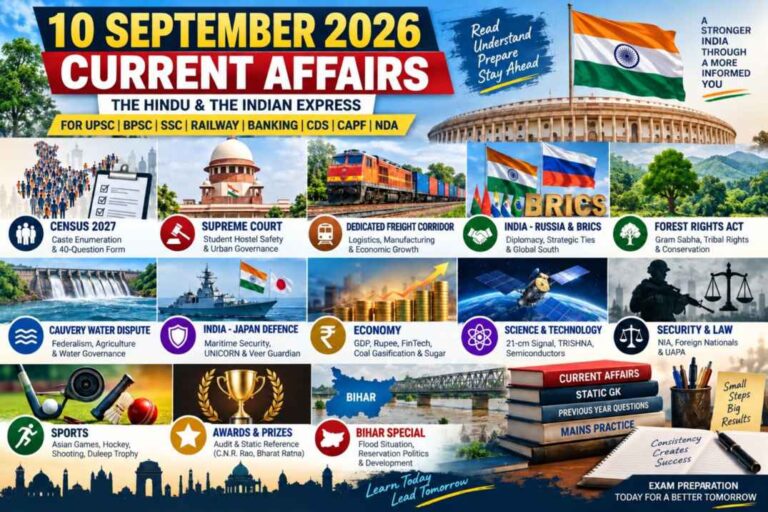
10 September 2026 Current Affairs | The Hindu & Indian Express | UPSC, BPSC, SSC
10 September 2026 Current Affairs from The Hindu & Indian Express covering Iran-US tensions, Hormuz, Ladakh Article 371,...
Read More →
10 September 2026 Current Affairs: Census 2027, DFC, BRICS, सुप्रीम कोर्ट, अर्थव्यवस्था, रक्षा, बिहार और Sports
10 सितंबर 2026 The Hindu और The Indian Express आधारित व्यापक हिंदी Current Affairs Class: Census 2027, DFC,...
Read More →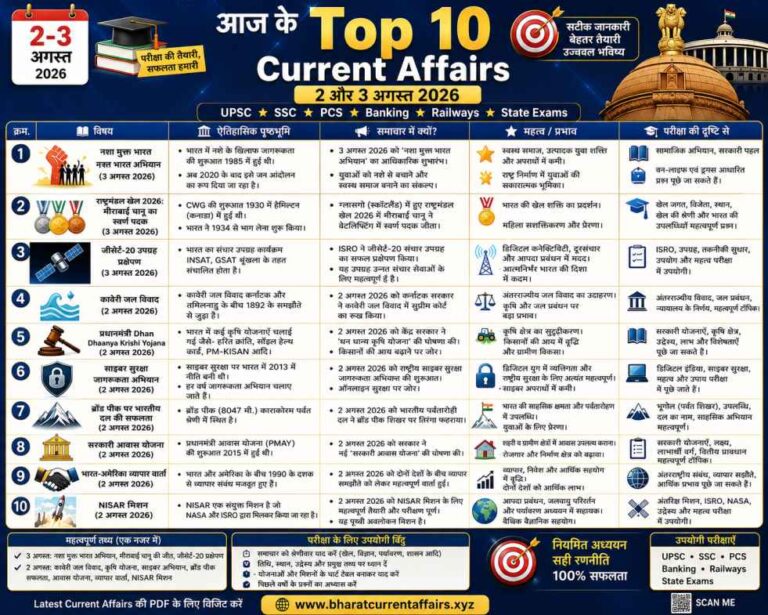
2-3 August 2026 Daily Current Affairs
2–3 अगस्त 2026 के Top 10 Current Affairs हिंदी में पढ़ें। UPSC, SSC, Banking, Railway, PCS व अन्य…
Read More →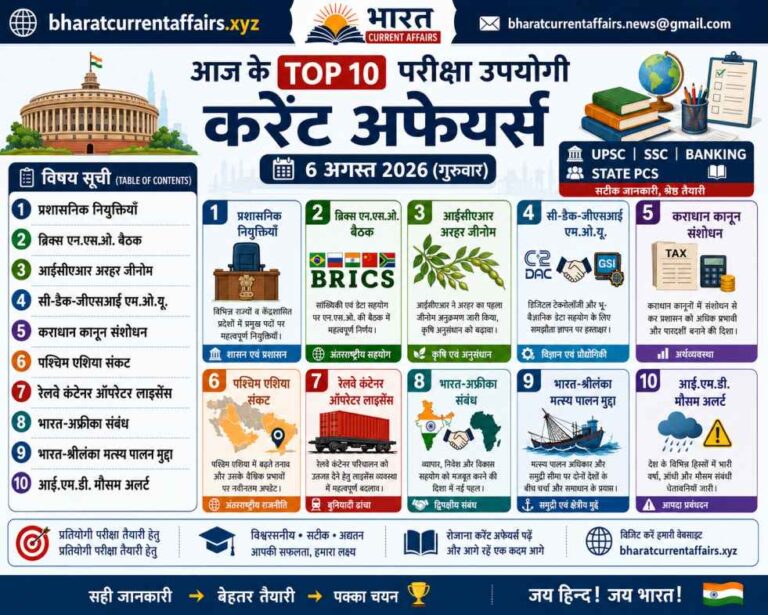
6 August 2026 Daily Current Affairs
Headline News for August 6, 2026: Key updates on new Cabinet Secretary TV Somanathan, BRICS NSO meeting, Critical…
Read More →
BRICS 2026: India Chairship, Members & Geopolitics
BRICS 2026 की India Chairship, 11 सदस्य, expansion, NDB, de-dollarisation, Global South और West Asia geopolitics की पूरी…
Read More →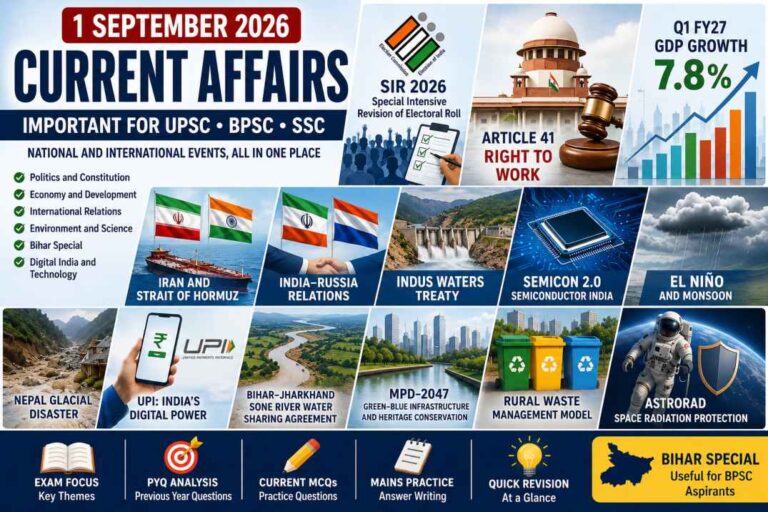
1 September 2026 Current Affairs: UPSC, BPSC & SSC
Read 1 September 2026 Current Affairs for UPSC, BPSC and SSC: SIR, GDP growth, Iran-Hormuz, IWT, Semicon 2.0,…
Read More →